

Table of Contents
-
1
As a startup or recruiter, it's smart to be upfront about what your tool accomplishes (or doesn't accomplish) and how the candidate's answers will be scored.
-
2
Before applicants get started, share or integrate a "preparation guide":
-
3
Check sample AI Video Interview questions with answers for candidates.
How startups and recruiters in the U.S. can assist candidates to succeed?
AI-based video interviews are gaining traction quickly in recruitment. Numerous companies already employ tools that display questions to the candidate via video, allow them to record a response, and then use software (or people) to analyse responses. Candidates might find these interviews a little odd at first, but with suitable preparation, they can do well.
This article will walk you through, whether you operate a startup or an employment agency, on how to assist applicants in preparing. You'll receive model questions for AI video interviews along with sample answers, as well as advice on best practices. Use this material to train applicants or place it on your site to draw in job seekers.
Why AI Video Interviews Are Prevalent Today
Before we move on to question and answer, it is helpful to understand why businesses are employing AI video interviews:
Efficiency: It conserves time. Recruiters don't need to arrange live calls with every candidate.
Screening at scale: For positions that have numerous candidates, it's a mechanism to eliminate early.
Consistency: All candidates view the same questions.
Data-assisted evaluation: Some platforms examine speech patterns, word usage, or expressions (although the justice of that is controversial).
To be sure, some systems still don't use fancy emotional or facial analysis as their sole dependency. HireVue, for instance, announced it would discontinue using facial expression scores in certain situations.
As a startup or recruiter, it's smart to be upfront about what your tool accomplishes (or doesn't accomplish) and how the candidate's answers will be scored.
What to Tell Candidates Before They Start
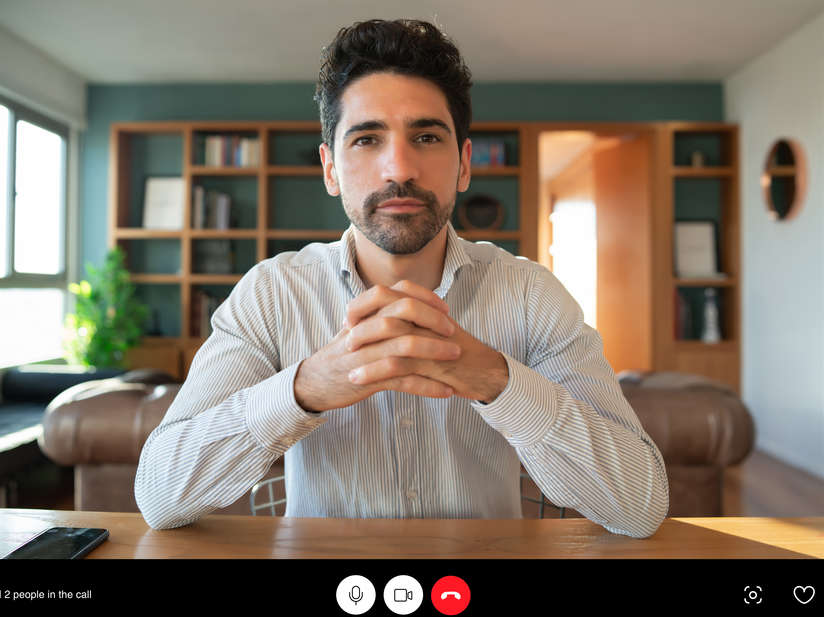
Before applicants get started, these are pointers you can share or integrate as a "preparation guide":
Test your gear
Verify your camera, microphone, internet, and browser. Use the same equipment you'll use on interview day.
Clean, uncluttered background
Use a clean, quiet area. Steer clear of distracting posters or movement behind you.
Front lighting makes it easier for the camera to capture your face.
Dress professionally
Dress like you would in an actual interview (or a little better). Although it's online, your appearance counts.
Sit properly & look at the camera
Sit up straight, dead center of the frame, and attempt to stare into the webcam (not your image on screen).
Be concise & clear
Since most video interviews restrict the amount of time you can talk, rehearse responding in the allotted time.
Use real-life examples
Don't talk in abstractions. Use previous work experiences to illustrate what you did. A structure such as STAR (Situation, Task, Action, Result) aids.
Be yourself, not scripted
Over-rehearsed or mechanical responses can be transparent. Humans or computers can recognize unnatural patterns.
Sample AI Video Interview Questions with Answers
Here are typical questions interviewees can expect to find in AI video interviews. For each, a brief explanation and a model answer follow.
1. Describe a time when you had to adapt quickly to a new process or technology at work.
Why do employers ask it?
Employers want to observe adaptability and how candidates respond to real workplace changes, especially in dynamic environments where new tools or systems are introduced.
How to answer
Focus on a specific example with measurable results.
Highlight the actions you took to adapt and the outcome of your response.
Keep your tone natural and structured using the STAR method (Situation, Task, Action, Result).
Sample answer
“In my previous job as a marketing coordinator, our team transitioned to a new CRM platform midway through a campaign (Situation). Initially, productivity dropped because most of us weren’t familiar with the system (Task). I took the lead to attend vendor-led tutorials, created a simplified guide for teammates, and conducted a short demo session (Action). Within two weeks, our team regained full efficiency and even improved campaign tracking accuracy by 20% (Result).”
2. Can you share an example of when you identified a problem early and took steps to prevent it from escalating?
Why do they ask it
To assess proactive problem-solving and awareness — how well you can detect risks and take initiative before an issue becomes critical.
How to answer
Choose a situation that had measurable impact.
Highlight your decision-making and how your actions benefited the team or company.
Sample answer
“During a product launch, I noticed inconsistent customer data entries that would have caused targeting errors (Situation). Before the campaign went live, I flagged the issue, validated the dataset, and worked with IT to run a data-cleanup script (Action). As a result, we avoided sending incorrect communications to 5,000+ customers and improved our conversion accuracy by 15% (Result).”
3. Tell me about a time you collaborated with a difficult team member to achieve a goal.
Why do they ask it
This measures interpersonal effectiveness, whether a candidate can maintain professionalism, influence outcomes, and build collaboration under tension.
How to answer
Describe how you managed conflict constructively.
Show empathy, communication, and focus on the end goal.
Sample answer
“In one project, I worked with a developer who disagreed with the marketing team’s approach (Situation). I scheduled a one-on-one discussion to understand his perspective and found his concerns about timeline were valid (Action). I proposed breaking the task into smaller deliverables and ensured he had visibility on priorities. The result was smoother coordination and an early project completion by three days (Result).”
4. Share an instance when you had to meet a challenging deadline. What steps did you take to ensure success?
Why do they ask it
They want to see how candidates organize, prioritize, and perform under pressure - all observable behaviours tied to reliability.
How to answer
Outline the timeline pressure clearly.
Show time management and collaboration behaviours.
End with a measurable outcome.
Sample answer
“We had to deliver a client presentation within 48 hours after sudden changes in scope (Situation). I broke tasks into hourly milestones, delegated responsibilities, and set up real-time check-ins via Slack (Action). Despite the time crunch, the presentation was delivered on schedule and received positive client feedback for clarity and insight (Result).”
5. Describe a time when you took initiative beyond your assigned duties.
Why do they ask it
Employers want to recognize candidates who go beyond expectations and demonstrate ownership; behaviours linked to strong performance.
How to answer
Focus on a time when your proactive effort led to measurable improvement.
Keep the example concise and outcome driven.
Sample answer
“While managing social media reporting, I noticed recurring errors in manual analytics tracking (Situation). Although it wasn’t part of my formal responsibilities, I designed an automated dashboard using Google Data Studio (Action). This reduced weekly reporting time by 40% and increased data accuracy, which helped the marketing head make quicker decisions (Result).”
6. Can you share a situation where you had to give or receive constructive feedback effectively?
Why do they ask it
To evaluate communication maturity and openness, consider how you handle feedback and foster growth within a team.
How to answer
Use a real instance.
Show that you remained professional, receptive, and solution oriented.
Sample answer
“During a campaign review, my manager pointed out that my presentation slides were too text-heavy (Situation). Instead of getting defensive, I asked for examples of what she preferred and revised them using visuals and concise data points (Action). The improved format was later adopted as the team standard for client presentations (Result).”
7. Tell me about a time when you balanced multiple priorities successfully.
Why do they ask it
They want to assess how candidates plan, focus, and maintain performance quality while juggling competing tasks.
How to answer
Outline how you prioritized and tracked tasks.
Show organization and adaptability in measurable terms.
Sample answer
“Last quarter, I handled three simultaneous marketing campaigns with different deadlines (Situation). I created a shared Kanban board to monitor progress, held brief check-ins with each team, and blocked focused work sessions (Action). All three campaigns were completed on time, with engagement results surpassing targets by 10% on average (Result).”
Tips And Best Practices for AI Video Interviews
Aside from choosing replies, here are some further suggestions:
Practice on camera. Record yourself answering typical questions so you can see and hear yourself.
Make your responses concise. If you have a time limit (e.g., 1-2 minutes), don't waste it.
Speak clearly and at a good speed; do not hurry or whisper.
Convey emotion and energy. Even though it's taped, you still want warmth and believability.
Be aware of your body language. Use moderate hand gestures, smile, and nod appropriately.
Pause before responding. Before answering, take 2-3 seconds to reflect.
Don't use filler words. Try not to get rid of "um," "uh," "you know."
Be cautious with keywords. Some AI programs capture key sentences, but don't overdo it. Be natural.
Be authentic. If the system or hiring manager can tell you're being phony or overly robotic, that can hurt you.
Also, inform candidates if the interview is one-way (i.e., they provide responses without a live interviewer) or two-way. Most AI video interviews operate asynchronously (one-way) to sift through candidates.
Final Thoughts
AI video interviews are now an integral part of most companies' hiring process. Although the format can seem strange at first, the premise is straightforward: it provides all candidates with an equal opportunity to showcase their skill sets and experiences in a well-organized manner.
For the job seeker, the success factor is preparation. Rehearse frequently asked questions, tape yourself to listen back for tone and clarity, and work one-on-one on answering in terms of real-life examples. Minor factors like lighting, body position, and being arcainuous can also pay major dividends.
As artificial intelligence influences the hiring process, both the employer and the candidate are winners when the hiring process is viewed not as an obstacle, but as a time-saving device that is also consistent. Properly executed, AI video interviews can be an efficient connector of talent and opportunity.